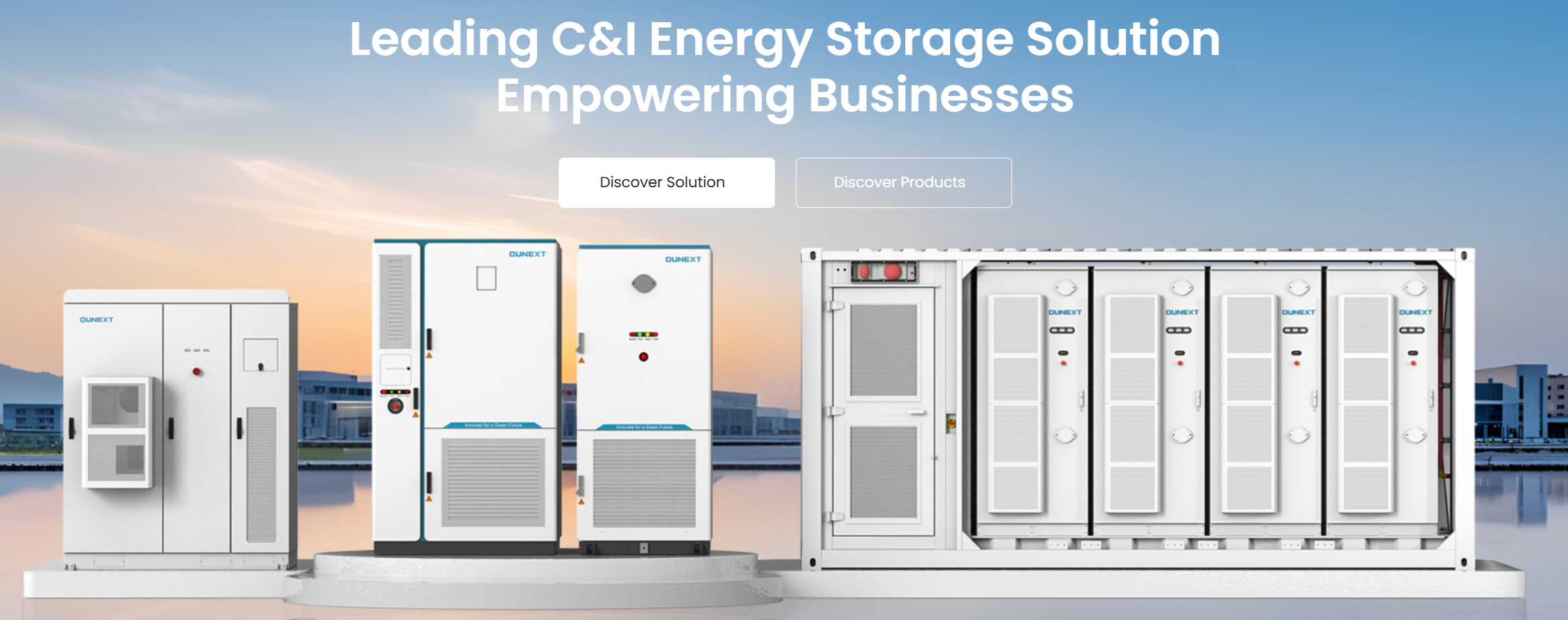
Opening comparison and setting the question
Large-scale planners and site owners often confuse capability with suitability; the choice between utility-scale and commercial all-in-one approaches depends on constraints, not only capacity. This tension becomes clear when a packaged solution such as an all in one energy storage is proposed for a project that needs tight grid participation and simple site operations. California’s grid planning and procurement experience has repeatedly shown that integrated systems can accelerate deployment when the technical and regulatory fit is right.
Scale and capacity: how size changes design priorities
Utility projects prioritize long-duration discharge, mass thermal management, and staged expansion. Commercial systems prioritize footprint, straightforward integration with on-site loads, and fast payback. Practical distinctions:
– Utility: multi-megawatt, multi-hour arrays; high-voltage interconnection; significant site civil works and transformer farms.
– Commercial: single- to low-megawatt packages; containerized or modular footprints; lower-voltage tie-ins and minimal site civil scope.
Choose utility when the objective is central-grid reliability or bulk energy shifting. Choose commercial all-in-one when the objective is demand charge reduction, backup power, or simplified installation at a single facility.
Grid connection, controls, and market participation
Utilities need grid-grade controls, advanced telemetry, and market-grade response. Commercial owners want predictable energy management and simple controls. The differences matter:
– Utility: sophisticated energy management systems, grid-forming capabilities, redundancy for N-1 failure modes, and certification for frequency or capacity markets.
– Commercial: integrated battery management, pre-configured EMS tied to site meters, simplified firmware updates, and local transfer schemes for backup.
When a packaged all-in-one option is selected for commercial use, confirm vendor support for interconnection studies and for any market signaling you intend to use.
Safety, standards, and permitting
Regulatory requirements diverge sharply by scale. Utility projects must satisfy interconnection standards, environmental reviews, and emergency response planning; commercial projects focus on local electrical code, fire department approvals, and occupant safety. Key considerations:
– Ensure compliance with recognized standards (IEC/IEEE as applicable).
– Verify thermal management, fire suppression options, and evacuation impacts for the chosen package.
– Confirm vendor documentation will support AHJ (Authority Having Jurisdiction) review without lengthy addenda.
Economics and revenue pathways
Economic logic differs: utility projects chase capacity, arbitrage and ancillary market revenues; commercial projects capture site-level savings. Typical revenue contrasts:
– Utility revenue sources: long-term capacity contracts, energy arbitrage across wholesale markets, frequency and voltage support.
– Commercial revenue sources: demand charge reduction, time-of-use offset, resilience value (insurance-style), and occasional local grid services.
Evaluate lifecycle cost, warranty terms, expected degradation, and financing options. A packaged all-in-one offers predictable capex and simplified warranty interactions, which can materially lower transaction costs for commercial buyers.
Operations, maintenance, and lifecycle considerations
Operational burden grows with scale. Utilities arrange dedicated O&M teams, spare parts depots, and active lifecycle planning. Commercial sites prefer low-touch operations and clear service contracts. Practical checks:
– Ask for mean-time-to-repair assumptions and planned maintenance windows.
– Confirm spare parts strategy and remote diagnostics capability.
– Verify expected end-of-life paths: repowering, reuse, or recycling logistics.
For many commercial owners, an integrated package minimizes coordination: a single supplier responsibility reduces finger-pointing during performance troubleshooting.
Common specification pitfalls
Project teams often make avoidable errors that degrade outcome quality:
– Specifying energy-only metrics (kWh) without matching power and discharge time to intended use.
– Overlooking site-specific constraints such as transformer capacity, setback distances, or rooftop load limits.
– Assuming grid services will be available without confirming tariff or market access.
Address these by testing a proposed all-in-one against real site load profiles and the interconnection study early in procurement.
When an integrated solution makes sense — and when it does not
An integrated all-in-one system is best when quick installation, limited site engineering, predictable performance, and single-vendor accountability are priorities. It is less suitable when you require bespoke grid services, complex staged expansion, or ultra-long-duration storage economics that favor custom builds. Compare these decision cues:
– Pick packaged when your metrics are site savings, resilience, and minimal integration effort.
– Consider custom-configured arrays when you need deep market participation, tailored redundancy, or gradual capacity scaling.
Final synthesis
Technical differences translate into distinct project workflows and commercial outcomes. When clarity of purpose guides specification — define intended services, match discharge profile to those services, and require vendor documentation that addresses interconnection and safety — you avoid costly rework. For many commercial deployments, a thoughtfully specified integrated option delivers straightforward installation, consolidated warranty responsibility, and operational simplicity, qualities that the right supplier can reliably provide through design and support from Dunext.