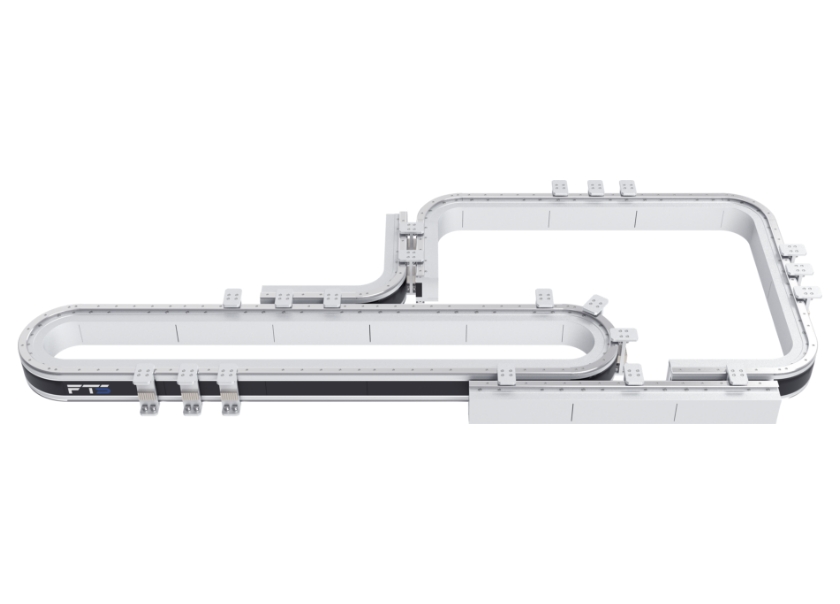
Facing the usual headaches first
Buyers turn up to factory tours expecting neat rows and shiny machines, then walk away with a stomach full of doubt — mis-matched stations, mysterious downtime, dodgy traceability. Start by asking how the plant moves parts from cell prep to formation; a well-integrated intelligent conveyor system and a reliable flexible transport system manufacturer partner change the entire flow. I’ve audited lines during commissioning and retrofits in Shenzhen, and the same messy patterns show up: poor ergonomics, unclear data, and shortcuts on cell handling. Spotting those problems early saves weeks of troubleshooting and a truckload of warranty risk.

Headline indicators to check right away
Look for measurable signals rather than promises. At first walk-through, ask to see:• Cycle time vs. takt time and a recent 30‑day trend.
• First-pass yield and scrap rate by station.
• Overall equipment effectiveness (OEE) and downtime logs with causes.
• Traceability demo — you should be able to pull a cell’s full journey from bar code to final test in under a minute.
If any of those numbers are missing, fuzzy or optimistic, you’ve got a problem to solve.
Process and equipment checks that expose weakness
Check these items physically and by request for documentation:• Cell handling: clamping force controls, ESD protection, and gentle transfer mechanisms for prismatic cells.
• Welding and joining: look for consistent parameters, weld visual logs, and process validation (not just claims).
• Formation and ageing: controlled charge/discharge racks, temperature logging, and isolation between batches.
• Filling and sealing: validated fill volumes, leak test records, and particulate control in filling areas.
• End-of-line testing: automated functional tests with statistical recording, not just sample checks.
If any step lacks recorded process parameters, plan for extra validation after purchase.
Material flow, layout and human factors
Bad layout creates repeatable defects. Watch for:• Bottlenecks where operators wait on parts; those stations hide manual fixes.
• Long, exposed transport runs for finished cells — increases contamination risk.
• Poor ergonomics that lead to manual handling errors and inconsistent assembly.
A tidy line will use modular cell transfer and quick-change fixturing so you’d rarely see operators doing improvisation. That’s where the supplier of your transport systems matters most.
Software, data and traceability — the audit you must do
Don’t take screenshots. Demand live access or recent exports:• MES/SCADA: single source of truth for station status, lot genealogy and alarms.
• SPC: control charts for critical welds and formation curves, with defined action limits.
• Firmware/version control: every machine should show a maintenance history and software revision.
• Backup and cybersecurity basics: regular backups, user role control, and simple network segmentation.
If data exists only in operators’ heads or spreadsheets, treat that as a red flag.

Quality system and supplier reliability
Ask for audit evidence, not marketing slides:• Recent internal audit results, corrective action records, and supplier PPAP or equivalent evidence.
• Spare parts availability and mean time to repair (MTTR) commitments for critical modules.
• Warranty terms tied to measurable line performance, not broad disclaimers.
A supplier that can’t explain how they handle component obsolescence or supply disruptions will cost you later.
Common pitfalls and if-you-see-this warnings
Watch out for these recurring issues:• Hand-built workarounds taped to machines — they mask unstable processes.
• One-person knowledge silos — if only one tech knows how a station works, risk is high.
• Promises of “we’ll tune it after installation” without a clear tuning protocol.
• Test equipment that’s clearly second‑hand or lacks calibration stickers.
If any of the above appears, add remediation time and cost into your buying decision immediately.
A fast on-site checklist you can use
Walk the line and tick off:1) Show me the latest 30‑day OEE and downtime breakdown.
2) Pull up one cell’s genealogy from raw materials to final test.
3) Demonstrate a weld parameter log and corresponding visual inspection record.
4) Open the MES and show alarm history for the week; ask about three recent alarms and fixes.
5) Inspect formation racks and heat control logs for any temperature drift.
Each successful demo reduces your project risk; unanswered items become negotiation points or scopes of work post-sale.
Final thought that ties it together
Don’t buy on looks or promises — buy on repeatable evidence. A dependable line proves itself in logged cycles, accessible data and sensible material flow, not glossy brochures. When suppliers show their configuration, spare‑parts plans and on‑site support clearly, you’ll understand how the line will behave on day one and month six. That practical clarity is what makes partners like FHS valuable: they supply systems that make problems visible early so you can act before they become failures.