Comparative framing: what I’m measuring and why it matters
I’ll set the brief plainly: a solar inverter’s job isn’t identical when fitted to a family roof and when it’s soldered into a commercial array. This is a comparison of functions and priorities — efficiency, safety, monitoring, and scale — with attention to the practical trade-offs an installer or facilities manager faces. A reliable solar inverter shifts DC to AC, yes, but how it does that, and what ancillary systems it must talk to, changes by use case.
Core roles that never change
Across both sectors the inverter performs four non-negotiable duties: converts DC to grid-compatible AC; enforces anti-islanding for safety; maximises usable energy through MPPT (maximum power point tracking); and provides telemetry for performance checks. Those are baseline responsibilities. Beyond them, the balance between cost, redundancy and control shifts, and that’s where comparisons are useful.
Residential priorities versus commercial priorities
Look at two simple lists and you see the divergence clearly. For residences the prime concerns tend to be: lower upfront cost; ease of installation and aesthetics; battery integration for backup; and straightforward monitoring for the homeowner. For commercial systems priorities often rank: scalable capacity; robustness under continuous heavy load; centralised monitoring and export management; compliance with stricter grid codes. The inverter that excels in a house may lack the throughput, thermal handling or redundancy a factory demands, and vice versa.
Types of inverters — and where each fits
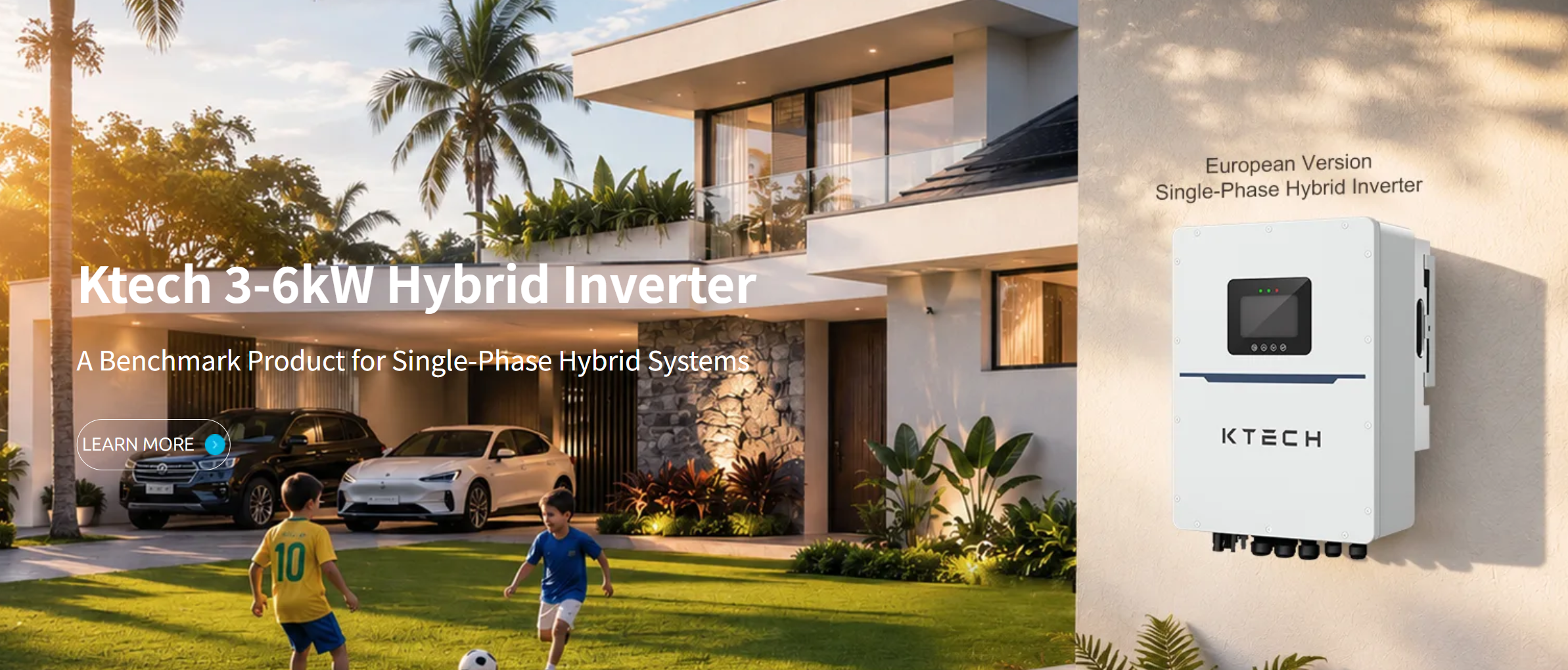
There’s no one-size-fits-all. Typical formats and their comparative strengths: string inverters — cost-effective for many rooftop homes and medium commercial lots; central inverters — high throughput for large commercial or industrial fields; microinverters — per-panel optimisation, useful on irregular roofs or for maximising small systems; hybrid inverters — blend PV, battery and sometimes generator control, popular in homes and smaller commercial installations where backup matters. When discussing a pv inverter, choose the form factor that matches shading, expansion plans, and maintenance bandwidth rather than defaulting to lowest price.
Sizing, thermal design and durability
Sizing an inverter is more than matching wattage. Consider continuous versus peak loads, ambient temperatures, and ventilation. Commercial arrays often demand N+1 redundancy or modular designs so one failed inverter doesn’t force a shutdown. Homes commonly tolerate a single point of failure if paired with a battery for critical loads. Heat is fatal to longevity; oversized enclosures without adequate cooling shorten service life. Solid-state experience from long-standing projects demonstrates that correct derating and thermal planning buys service years.
Monitoring, control and grid interaction
Commercial sites require detailed SCADA-level interfaces and export control to manage demand charges and grid compliance. Residential monitoring emphasises clear dashboards and fault alerts. Firmware updates, remote diagnostics, and secure communications are decisive features. The comparative insight: a commercial operator pays for integration and fine-grain control; a homeowner values simplicity and reliability. Both benefit when manufacturers provide transparent performance logs and firmware with a predictable update policy.
Common pitfalls I see in field practice
Installers and buyers repeat the same mistakes. They undersize for peak temperatures, ignore harmonics and power factor in load-heavy sites, choose single-point solutions where modularity is needed, or buy based on nominal efficiency without checking part-load figures. Overlooking warranty terms and spare-parts supply chains causes long downtime. These errors cost time and money; they’re avoidable with straightforward checks at specification stage.
Evidence from the sector
Industry conversations, including topics highlighted at Solar Power International (SPI), consistently show that practical reliability and serviceability now outrank headline efficiency figures when operators evaluate long-term cost. That one observation aligns with projects I’ve reviewed: an inverter that’s easy to service and monitor often delivers better lifetime return than the highest-efficiency unit that’s fragile or hard to update.
Decision checklist — use this before you buy
Ask about: projected part-load efficiency; thermal derating curves; service and firmware update policies; monitoring granularity; compatibility with battery systems; local technical support response times; and spare parts availability. For commercial bids, insist on redundancy plans and site-specific grid-code compliance statements. For homes, prioritise hybrid capability and simple, actionable monitoring for occupants.
How the right partner reduces risk
Technical features matter, but so does supply-chain resilience and honest documentation. A supplier that stands behind firmware, offers training for local engineers, and keeps clear stock levels for replacements reduces operational friction. Practical procurement is often won by firms that can demonstrate consistent service records and clear installation guidance rather than by aspirational spec sheets.
Summation
Comparatively, residential projects favour simplicity, battery integration and low-cost, user-friendly solutions; commercial projects value scale, redundancy and deep integration with site controls. Choosing the appropriate inverter type, sizing it for heat and real load, and confirming serviceability are the decisive steps. Practical selection and dependable supply lines are where real value appears, as shown by project histories and industry gatherings — and that combination of traits is precisely what partners such as Ktech bring to ongoing system performance and reduced operational risk.