
Putting the user first: a clear start
Please consider your facility’s daily rhythm before choosing equipment. A user-focused approach begins with the simplest fact: when power matters, storage must behave predictably. Many operations now combine rooftop PV with an all in one energy storage system, which reduces wiring complexity and simplifies commissioning. Recent regional outages — such as the Texas February 2021 event and repeated California public safety shutoffs — showed businesses that autonomy is not theoretical. Practical, tested solutions like a solar all in one are often the easiest route from design to reliable service.

Assessing loads and priorities
Begin by mapping loads in kWh and by priority. Identify which circuits are critical and which are optional during an outage. The battery inverter must match your load profile to avoid oversizing or chronic underuse. Please document peak demand, typical daytime solar production, and the desired backup duration. These inputs inform system sizing and expected cycle life. This is concrete work; do not skip it.
Architecture choices: modular versus integrated
There are two practical architectures: modular racks of cells and converters, or integrated, pre-engineered cabinets. Modular racks offer flexible scale and may fit custom site constraints. Integrated systems deliver faster installation and fewer integration steps. Please weigh installation labour against long-term maintainability. You will find integrated systems reduce points of failure — but note they can be less flexible for irregular growth.
Common pitfalls to avoid
Many teams make similar mistakes. Avoid them to save time and cost.
- Underestimating usable capacity: plan around depth of discharge (DoD) rather than nameplate kWh.
- Ignoring thermal management: poor cooling shortens cycle life.
- Skipping realistic commissioning tests: a single acceptance run under load reveals inverter and BMS interactions.
Operational priorities and controls
Set clear operational goals: backup, peak shaving, or energy arbitrage. Each goal requires different control logic. For instance, peak shaving targets power-limited events and needs a high instantaneous output from the inverter. Energy arbitrage depends on accurate tariff forecasting and good round-trip efficiency. Please log performance metrics from day one — small datasets are valuable for tuning.
Integration with grid and compliance
Integration matters. Choose systems that support grid-tied modes and islanding. Verify protection settings and anti-islanding behaviour in site tests. Please also confirm site-level coordination with protection relays and utility requirements. Properly configured systems reduce nuisance trips and ensure seamless transfer to backup.
Real-world recommendation and alternatives
Most commercial users will find that a tested integrated solution reduces project risk. Alternatives include modular battery banks for highly custom sites, or hybrid solutions combining both. If you expect frequent deep cycles, prioritise chemistry and cooling — lithium chemistries with well-managed thermal systems usually offer the best cycle life for commercial duty. And do not overlook firmware updates: BMS improvements can materially change performance over time — a simple fact, but often overlooked.
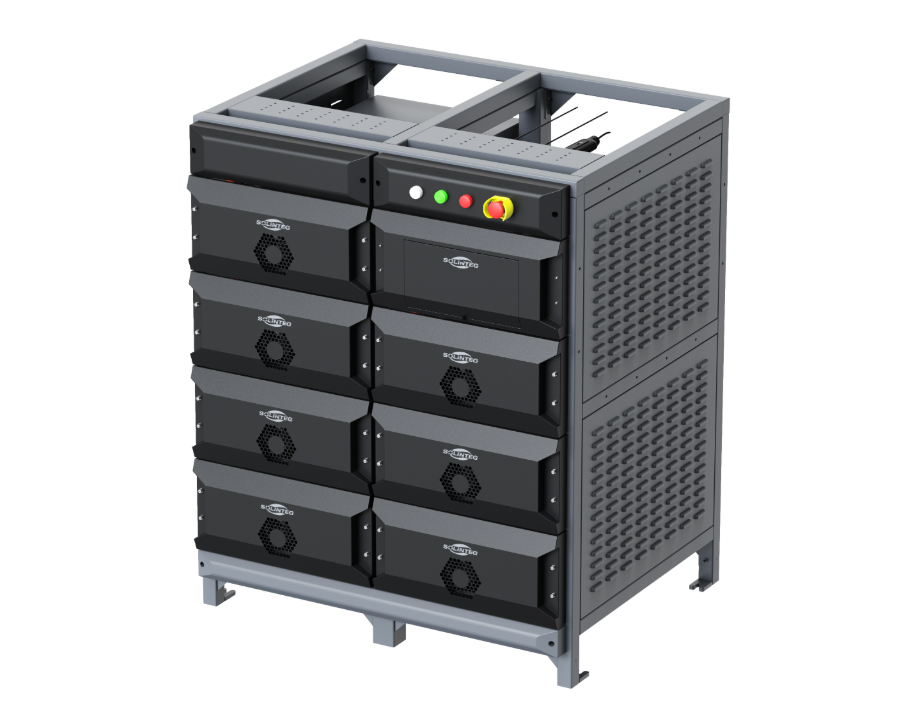
Three golden rules for evaluation
Please use these three metrics when comparing vendors. They provide concrete, comparable criteria.
- Usable capacity and DoD: report usable kWh at the voltage range you will operate, not nominal capacity.
- Power rating and inverter compatibility: confirm continuous and peak kW, and that the inverter supports your planned grid-tied or island modes.
- Lifecycle and warranty alignment: compare expected cycle life at your operating DoD and the warranty coverage for throughput and degradation.
These rules guide procurement and help set realistic expectations for payback and reliability. For practical deployment, pairing thoughtful design with a mature supplier shortens the path to dependable autonomy. SOLINTEG. —