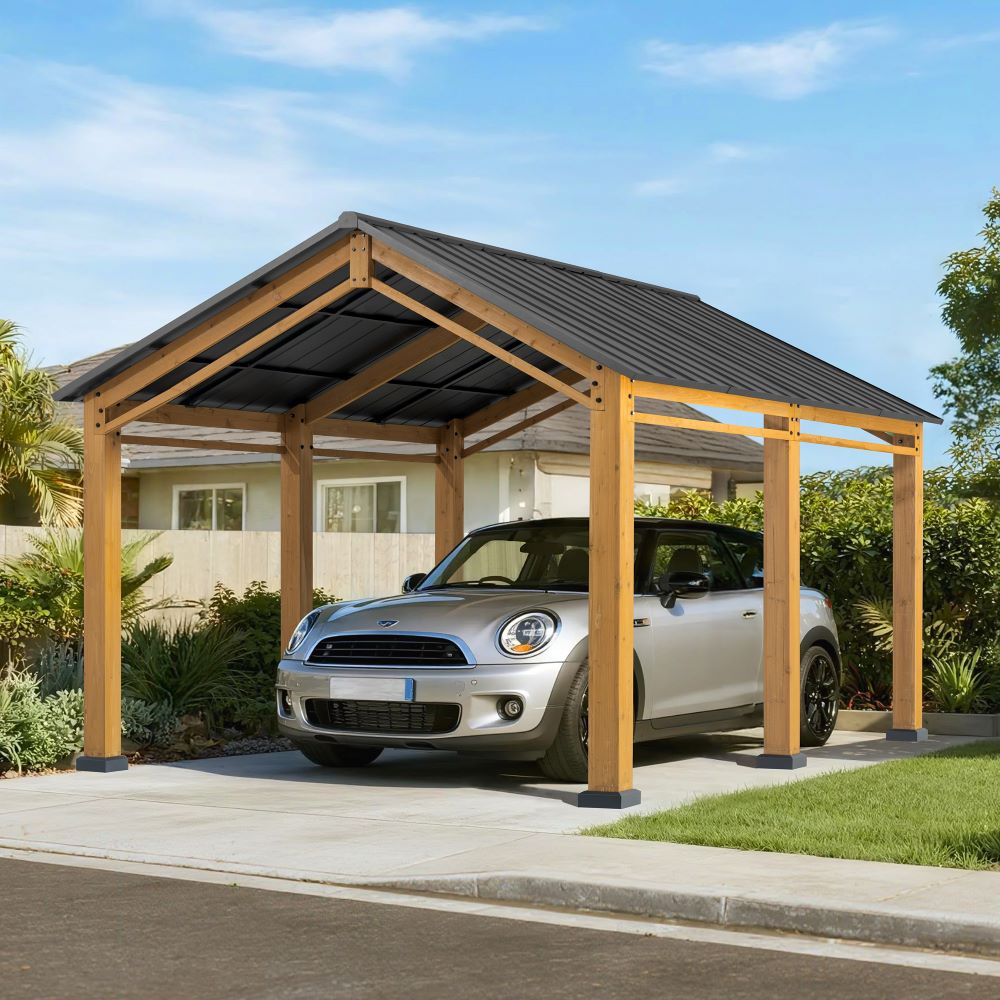
A smarter way to compare Sunjoy Carports: begin with weather exposure at the planned location for RV or trailer storage
SUNJOY carports can look similar at first glance, but the better choice begins with the space around your RV or trailer. Start by studying the planned location. Note how much open ground is available, which direction weather usually comes from, and how the vehicle will enter and leave. This simple review keeps the purchase tied to actual use rather than appearance alone.

Weather exposure changes the questions worth asking. An open yard may leave a shelter exposed on several sides, while a position beside a building may have different access and clearance needs. Look at the area during the times you expect to use it. Consider sun, rain, wind, falling branches, and standing water as part of the site review. These are planning factors, not guarantees about how any particular structure will perform.
Match the shelter to the planned use
Define the job before comparing product listings. If the main purpose is RV or trailer storage, think about the vehicle’s length, height, turning path, and the room needed to reach doors or storage compartments. If the same covered area may serve equipment or another vehicle, include that routine in the comparison. A structure that fits one parking position may be less useful if the surrounding space makes regular access awkward.
The collection page presents carports for vehicles, RVs, or equipment. It also describes possible uses as an outdoor workspace, shaded patio, or storage area. That broader range can help you frame the decision, but it does not make every model suitable for every purpose. Keep the primary use clear, then treat secondary uses as a requirement to compare against the selected listing.
Read material claims in context
Material descriptions can help narrow the field, especially when weather exposure is central to the decision. SUNJOY describes steel frames and weather-resistant roofing as features of its metal carports. That is a page-listed description, not an independent promise of durability or storm resistance. Use it to identify the construction language that matters to you, then keep the wording tied to the model or collection page where it appears.
When comparing carports for sale, separate confirmed details from assumptions. A roof described as weather-resistant does not by itself answer every question about local conditions, installation, drainage, or long-term care. Likewise, a steel frame label does not establish a universal performance result. A careful comparison records what the listing says and avoids filling gaps with expectations drawn from a different shelter.
Check what the kit includes
Setup is another part of fit. The SUNJOY collection describes its kits as including pre-cut parts, hardware, and step-by-step instructions. Those details can make a listing easier to assess because they show what the collection says is included in the kit. They do not, on their own, describe every task, tool, site condition, or model-specific requirement involved in putting the shelter in place.
Before choosing a model, review the product information with the planned site in mind. Compare the stated dimensions with the available footprint. Consider whether the vehicle can approach the shelter without tight turns. Look for the listed roof and frame details, then note any stated accessories or use limitations. Keep these checks separate from general assumptions about installation or weather performance.
- Start with the planned use: vehicle, RV, trailer, equipment, workspace, patio, or storage area.
- Compare the page-listed material description, including steel frames and weather-resistant roofing.
- Review the stated kit contents, including pre-cut parts, hardware, and step-by-step instructions.
Build a short comparison routine
A useful comparison does not need a complicated scoring system. Begin with the location, then move to the vehicle, the intended routine, and the page-listed construction details. If two options appear close, give priority to the one whose stated features and proposed use align more closely with the space. Avoid treating a broader list of possible uses as proof that a model will meet every secondary need.
Also consider how the shelter will function between trips. An RV or trailer may need more than covered parking if you plan to access supplies, prepare equipment, or use nearby storage. Those needs affect the practical value of the footprint. They should be considered alongside the product description, not inferred from the presence of a roof alone.
Use this final check before deciding: identify the exposure at the planned location, define the vehicle and access routine, compare the page-listed construction language, and review what the kit description includes. Then choose the option that fits the use you can clearly describe. A focused approach makes SUNJOY a more manageable name to compare without turning collection-level descriptions into promises about every individual model.