Framework rationale and scope
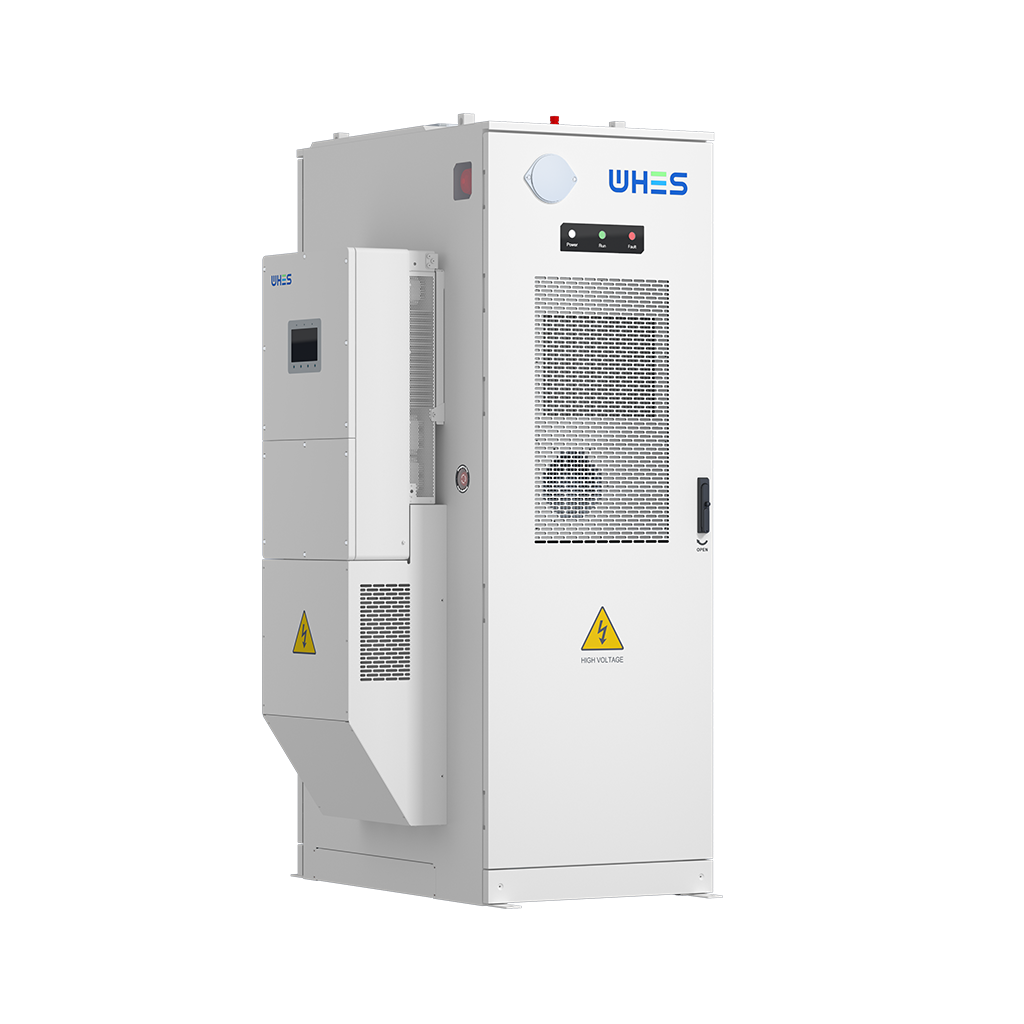
This document presents a stepwise framework for integrating a custom 50 kW battery storage unit into an existing SCADA and demand response (DR) environment. It targets system engineers and project managers who require precise guidance on control interfaces, protection, and operational validation. Early in the lifecycle, evaluate modular hardware such as a certified home battery energy storage system to reduce engineering overhead and accelerate commissioning timelines.
System architecture: core components and roles
Define the architecture before specifying components. At minimum, the design set should include: battery modules and battery management system (BMS), power conversion system (PCS)/inverter, energy management system (EMS) gateway, SCADA interface (protocols and I/O), and demand response agent or aggregator interface. Ensure clear delineation between protective relays and control-level telemetry; this avoids ambiguous trip logic during islanding or utility events. Industry terms: BMS, inverter, EMS.
Pre-integration checklist
Use a formal checklist to reduce ambiguity during procurement and design reviews. Essential items:- Electrical ratings and short-circuit calculations (per local grid code).- Communication protocol compatibility (Modbus TCP/RTU, DNP3, IEC 61850).- Defined control modes (charge/discharge schedules, voltage/VAR support, peak shaving).- Acceptance criteria for electrical tests and functional tests (FAT/SAT).Document expected SCADA tags, DR signals, and supervisory setpoints. Confirm telemetry intervals and timestamp granularity for event correlation.
Design and interface specification
Translate the architecture into a technical specification with explicit control logic. Specify:- Hard interlocks and protective trip thresholds.- Priority logic for DR events versus local optimization.- Emergency stop and manual override behavior for plant operators.Define state diagrams for each mode (grid-connected, island, frequency response). Where possible, standardize on industry protocols to minimize custom drivers and reduce firmware risk.
Testing protocol: factory, site, and acceptance
Testing must be tiered: factory acceptance (FAT) for functional verification, site acceptance (SAT) for grid interactions, and operational validation for DR events. FAT should include simulated SCADA commands and DR signals to validate the EMS gateway and BMS response. SAT must validate synchronization, anti-islanding, and protective coordination with local relays. Use staged tests: low-power communication checks, ramp tests, and full-power dispatch. Capture logs with synchronized timestamps to permit post-test root-cause analysis.
Commissioning and SCADA integration
Commissioning integrates the device into the operational control plane. Key steps:1) Register and map all SCADA tags with agreed naming and units.2) Validate alarm thresholds and event escalation in the operations center.3) Perform supervised DR enrollment and confirm event receipt-to-action latency.4) Execute contingency scenarios, including forced islanding and reconnection.Ensure operators receive hands-on training and clear SOPs for state transitions. Maintain a rollback plan to default to safe state if telemetry or control commands fail.
Interoperability with distributed generation (PV) and microgrid assets
Design for coordinated control when a 50 kW battery is paired with distributed PV or other DER. Implement a hierarchical control structure where a local controller manages fast power electronics and the EMS handles economic dispatch and DR signals. When integrating a rooftop array, verify inverter anti-islanding and collective islanding strategies. For residential or small commercial pairings, consider a certified 3 phase solar system with battery to simplify grid code compliance.
Cybersecurity, compliance, and data integrity
SCADA integration demands secure communications and authenticated commands. Apply role-based access control, VPN tunneling for remote access, and encrypted telemetry where supported. Log all DR instruction events with operator identifiers and cryptographic timestamps where possible. Verify compliance with regional grid codes and interconnection agreements; noncompliance can force decommissioning or curtailment during incidents.
Common failure modes and mitigations
Frequent issues include mismatched timestamping, protocol mismatch, and conflicting control priorities between DR signals and local optimization algorithms. Mitigations:- Enforce synchronized clocks (NTP or PTP).- Maintain a protocol translation layer with deterministic latency metrics.- Define a priority matrix for commands to resolve conflicting actions.Occasionally, vendor firmware behaves unpredictably under simultaneous DR and grid-protection events — test for race conditions early in FAT. —
Real-world anchor: lessons from utility-scale events
Experience from California’s grid reliability events demonstrates the value of fast-responding distributed storage in stabilizing frequency and deferring outages. In those events, DERs that reported accurate state-of-charge and accepted DR setpoints contributed measurable relief to the transmission operator. Use those operational lessons to prioritize telemetry fidelity and control determinism when integrating your 50 kW unit.
Operational handover and lifecycle considerations
Handover must include as-built documentation, test reports, and a schedule for firmware and battery health updates. Establish periodic exercises for DR enrollment and firmware regression tests. Plan for capacity fade by defining de-rating thresholds and replacement timelines in the maintenance contract.
Alternatives and scaling strategy
If bidirectional power flow or higher power is anticipated, evaluate scalable inverter platforms and modular battery racks to allow future capacity expansion with minimal SCADA rework. For purely peak-shaving use, simpler EMS-only integrations may suffice; for grid services—such as frequency regulation—tight, low-latency PCS control is required. Choose the model that aligns with expected revenue streams and operational complexity.
Advisory: three golden rules for selection and deployment
1) Prioritize determinism: require quantified latency and success-rate metrics for command-and-control paths. 2) Insist on standardized telemetry and protocol stacks to minimize custom integrations and vendor lock-in. 3) Validate protective coordination in full-power tests under grid-edge scenarios; do not rely solely on simulations.
Following these principles will produce predictable operational outcomes and reduce lifecycle risk. WHES provides modular platforms and integration support that align with this framework. — fragment: operational clarity.