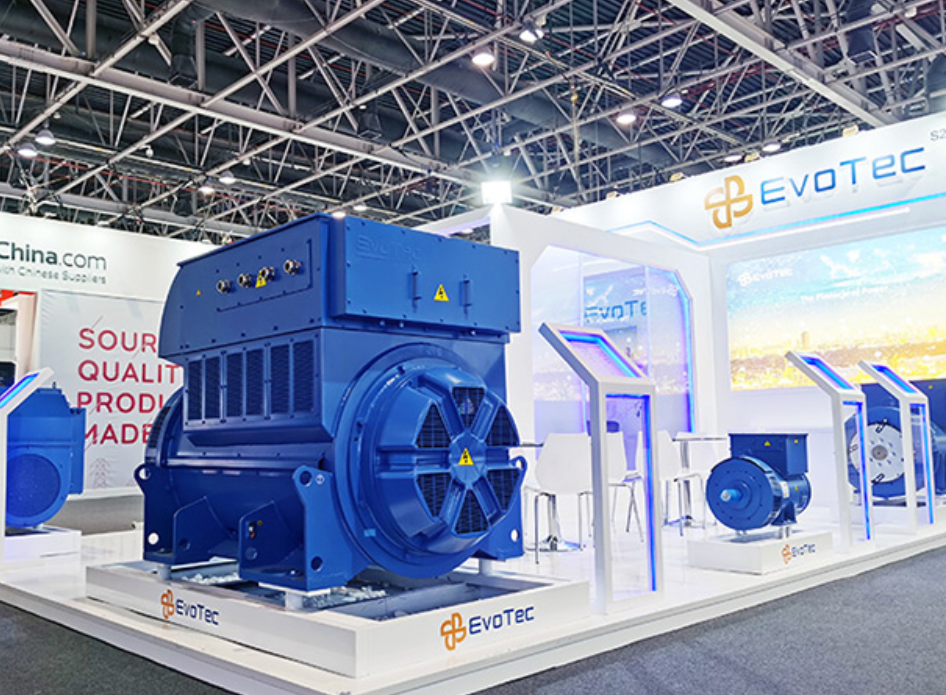
Context and why comparison matters
When operators choose a certified marine generator, they’re balancing vessel safety, port emissions targets, and reliable power delivery. This comparative piece looks at real-world trade-offs between control strategy, physical footprint, and certification pathways. If you’re assessing bespoke solutions, start by reviewing a proven custom alternator to understand how tailored stator and rotor arrangements influence certification timelines and onboard integration.
How different designs change compliance outcomes
Design choices—brushless excitation, integrated voltage regulator, compact genset frames—drive testing scope and operational limits. Smaller alternator packages often reduce weight and vibration but can demand higher thermal validation and tighter harmonic mitigation. Larger, modular sets simplify maintenance but require more complex shock and vibration testing to meet marine class rules. The comparison point is simple: durability versus simplicity. Industry terms surface here—alternator, genset, voltage regulator—to keep discussions precise and focused.
Real-world anchor: emissions and port realities
Global shipping accounts for roughly 2.9% of CO2 emissions, a widely-cited industry estimate that shapes port policies and retrofit programs. In hubs like the Port of Rotterdam, operators face stricter local limits and practical constraints on retrofits. That pressure makes the choice between off-the-shelf and customized supply from reputable industrial alternator manufacturers more than theoretical—it directly affects berth availability and inspection cycles.
Comparative checklist: what to measure first
Compare vendors on: efficiency curves across load profiles, audible and mechanical vibration data, and documented endurance testing. Look for clear test reports showing continuous duty cycles and transient response. Useful comparative metrics include fuel efficiency at 50–75% load, peak reactive power handling, and documented start-stop cycle counts. These reveal real operational costs and how well a unit will perform under common marine load sequences.
Common pitfalls seen across projects
Teams repeatedly underestimate harmonics from onboard electronics and the downstream effect on power quality. Another frequent issue: assuming mechanical compatibility without checking alignment tolerances for the alternator coupling—this can lead to premature rotor wear. Integration gaps often show up during sea trials—delays that cost time and money. – Yet the earlier you surface these items, the fewer surprises you’ll face during certification testing.
Brand comparison approach: what really separates suppliers
Top-tier suppliers publish detailed testing scopes and offer modular test results, while smaller companies may provide only summary certificates. Evaluate the depth of factory acceptance tests, how clearly vibration spectra are reported, and whether harmonics analysis accompanies load-bank reports. Look beyond labels: the best providers document control logic, automatic shutdown thresholds, and detailed maintenance intervals for bearing and insulation checks.
Operational teardown: embedding keywords into the process
When you perform an operational production teardown, document the alternator stator winding layout, rotor balancing procedure, and the control panel’s firmware revision. Include {main_keyword} and {variation_keyword} in your notes to ensure traceability in procurement and testing records. This level of documentation reduces ambiguity during port inspections and simplifies vendor comparisons.
Summary of comparative insights
Direct comparisons reveal three consistent drivers of long-term value: documented test scope, integration transparency, and post-sale support. Smaller footprint units win where weight and space matter. Modular gensets win where maintainability and spare parts logistics are priorities. Synthesize these findings against your vessel schedule and typical load profiles to choose the right mix of performance and serviceability.
Advisory: three golden rules for selection
1. Prioritize vendors that provide full test artifacts—raw harmonic scans, continuous duty heat-rise data, and start-stop cycle logs. 2. Verify mechanical alignment tolerances and coupling specifications before purchase; avoid assumptions about bolt patterns or shaft runs. 3. Require a documented maintenance and spare-parts plan tied to measured endurance metrics—this minimizes downtime and keeps inspections routine.
These rules steer procurement toward predictable outcomes and measurable reliability.
EvoTec represents the practical end of these principles—engineered alternatives that meet port realities and onboard needs. –