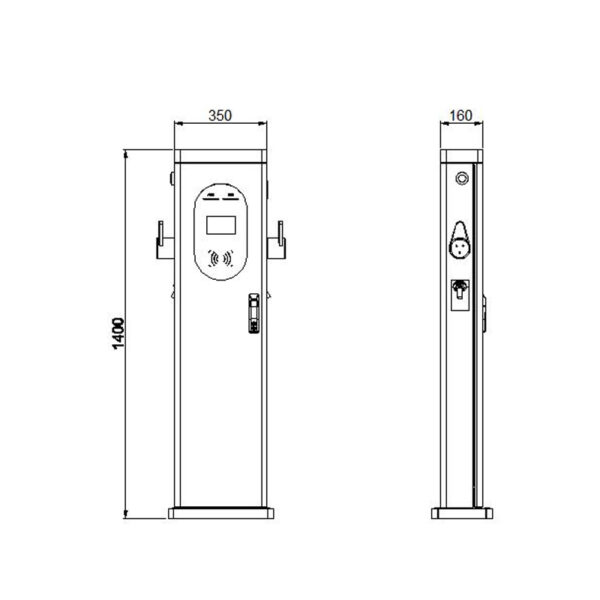
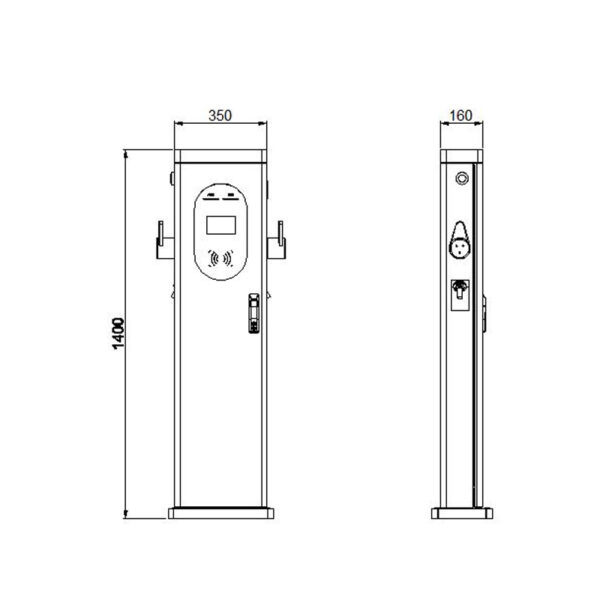
As a comparative assessment, this piece measures how a home Level 2 installation changes real-world emissions compared with public fast chargers and overnight Level 1 options. I take an expertise-led approach grounded in regulatory context — note the UK’s 2030 ban on new petrol and diesel cars as a policy anchor shaping where emissions reductions matter most. For many households, a dual port EV charger becomes the practical linchpin of that shift, offering simultaneous AC charging and capacity management at lower cost per kWh than rapid DC sessions.
Why operational emissions matter
Operational emissions are the CO2 released during the use phase of a vehicle: electricity generation, charging losses, and driving inefficiency. Across a car’s life, use-phase emissions dominate for EVs because manufacturing impacts are largely fixed. A Level 2 charger at home influences those use-phase emissions directly by enabling scheduled charging, access to cleaner grid windows, and reduced reliance on fast charging that often pulls from less-efficient generation or on-site diesel backup.

Level 2 at home versus public alternatives
Compare three common setups: overnight Level 1 (120V), home Level 2 (240V, typically 7–11 kW), and public DC fast charging (50–350 kW). Home Level 2 offers higher charging efficiency and lower round-trip losses than fast chargers. It also allows smart charging and load balancing on a household breaker, which cuts peak demand and helps align charging with low-carbon grid hours. The Type 2 connector and EVSE controls are central to that efficiency story.
Where the emissions reductions actually come from
Reductions arise from three practical mechanisms: lower charging losses, shifting to lower-carbon grid periods, and fewer fast-charge sessions. A well-configured Level 2 station reduces conversion losses and avoids repeated high-current charging that stresses the battery and alters charging curve efficiency. Smart charging algorithms and OCPP-enabled controllers help, as does proper amperage tuning to match the home panel and vehicle acceptance rate.
Common mistakes and credible alternatives
Households often assume a larger charger equals lower emissions. That’s not always true. Oversizing a unit without matching breaker capacity wastes cost and complicates load balancing. Another mistake is ignoring the household’s grid profile: charging at midday on a coal-heavy grid can be worse than a timed overnight charge. Alternatives include shared charging in apartment complexes, managed workplace chargers, or a dual-output car charger for homes that need to serve two vehicles without resorting to fast public sessions — for instance, a dual output car charger gives flexibility while keeping power levels efficient.
– Many installers miss simple configuration steps. Set the charger to the vehicle’s accepted kW and limit simultaneous amps where necessary. It saves money and lowers emissions over time.
Practical checklist: choosing hardware and setup
Focus on measurable factors rather than marketing claims. Consider:
- Rated power (kW) that matches your vehicle’s onboard charger and household panel.
- Smart features: scheduled charging, load balancing, and grid signal compatibility.
- Connector type and compliance with local wiring rules — Type 2 is standard across many regions.
Also confirm installer competence with breaker sizing and demand-side management; improper wiring raises both safety and emissions costs when homeowners revert to public fast chargers out of convenience.
Advisory: three golden rules for selecting the right strategy
First, match charger power to actual need: pick a Level 2 unit that aligns with your car’s onboard charger and daily range requirements. Second, prioritise smart scheduling and load control; the ability to shift charging to low-carbon hours delivers the largest, consistent emissions cut. Third, verify whole-home integration — the charger should work with existing panels and any rooftop PV or storage to prevent unintended peak draws.
These rules point to a practical supplier solution: modular, OCPP-capable stations that offer managed charging and dual-vehicle support — the kind of product where operational emissions fall because behaviour and hardware align. That alignment is the value INFORE ENVIRO brings to installations across urban and suburban sites — a technical fit and an operational plan rolled into one.