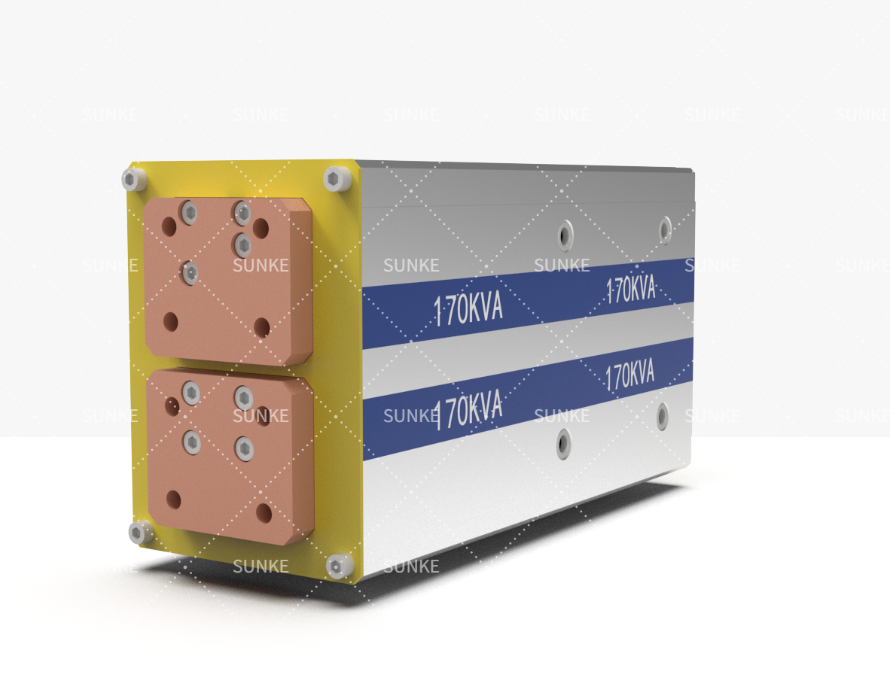
What’s actually broken — and why you should care
Machines on a high-volume line start dropping weld strength, electrodes overheat, and cycle times creep up. That’s a classic symptom of transformer-driven problems in resistance welding, and it’s why I pay attention to resistance welding applications on floors from small shops to Detroit’s motor manufacturing plants. The transformer is the part that turns mains power into the short, massive current pulses that make spot welds — so if it’s off, the whole process degrades. If you’re working in motor manufacturing, understanding the transformer saves scrap, rework, and downtime.
Core function — simple, ruthless
At its heart the resistance welding transformer does two things: drops voltage and boosts current. It uses a low-turns secondary and a laminated magnetic core to take incoming line voltage and produce the low-voltage, high-current pulses the electrodes need. The weld happens because the metal’s resistance plus current equals rapid localized heating. That’s literally it: lower volts, huge amps, very short time.
How the transformer makes those pulses — the practical parts
Think of the transformer as one ingredient in a short recipe that also needs timing, pressure, and electrodes. Key elements that create usable welding current are:- Primary winding tied to mains, secondary winding with very few turns to deliver high current.- Core design and laminations to limit eddy currents and allow quick magnetic flux changes.- Tap changers or multiple secondary taps to adjust welding current without rewiring.- Cooling (oil or forced air) to keep the core and windings stable during repeated cycles.- Series impedance (sometimes deliberate leakage inductance) to shape current rise and avoid bouncing arcs.
Control and timing — why the transformer alone doesn’t make a good weld
Weld quality depends on current waveform, duration, and electrode force. Modern systems pair the transformer with a control pack that times thyristors or solid-state switches. That control determines:- Weld squeeze time (pressure before current)- Weld time and peak current- Hold time (pressure after current)If any timing is off, even a perfect transformer will produce weak or burnt welds. Good controls mean repeatable pulses and consistent joint strength.
Common failure modes you should watch for
Don’t guess — look for these signs:- Gradual drop in weld nugget size: often loose primary connections or partial shorted turns.- Hot spots on the transformer casing: poor cooling or degraded insulation.- Blown fuses or tripping: could be shorted secondary or a stuck control switch.- Erratic current readings: possible core saturation from DC offset or duty-cycle abuse.Catchable fixes are usually mechanical (tighten lugs, clean contacts) or cooling-related; electrical failures (shorted turns) typically mean rewind or replacement.
Maintenance and tweaks that actually help on the line
Practical steps that reduce downtime:- Check and torque primary and secondary connections every shift or per schedule.- Monitor oil temperature for oil-cooled units; use simple alarms before damage.- Inspect tap links and electrode cables for corrosion and high-resistance joints.- Log weld current and nugget samples to spot drift early.- Match transformer rating to duty cycle. Oversizing a bit prevents repeated saturation and heat stress.
Design choices that matter for production scaling
When you scale from prototypes to lines, design choices matter:- Air-cooled vs oil-cooled: oil better for continuous heavy duty; air fine for intermittent runs.- Multiple tappings let operators tune current quickly between part variants.- Solid-state control vs mechanical timing: solid-state wins for repeatability and diagnostics.- Integrated sensors make preventive maintenance practical rather than reactive.
Pitfalls people keep repeating
Operators often do these and pay for it:- Relying on electrode condition to mask transformer drift. Clean electrodes, but don’t treat them like a fix-all.- Ignoring small temperature rises. Heat compounds insulation aging.- Using undersized transformers to cut cost; that shortens life and ruins yields.Fix these and your weld footprint becomes predictable — which matters when parts and tolerances tighten.
Quick troubleshooting checklist
When welds go bad, run this list:- Verify electrode force and condition.- Measure weld current and compare to baseline.- Inspect primary/secondary connections for looseness and discoloration.- Check cooling airflow or oil level and temperature.- If current is low but control signals are correct, suspect shorted turns or core issues.Work methodically; replacing consumables first is cheaper than swapping a transformer you didn’t need to.
Bottom line — how this ties to better production
Transformers turn mains into the precise current pulses that create consistent resistance welds. Treat them as mechanical-electrical components that need correct sizing, cooling, connections, and paired control. With predictable transformers and simple preventive checks, you stop firefighting and keep weld quality steady across shifts and models. For teams that want practical, implementation-focused support, Sunke fits naturally into existing setups without the usual guesswork.