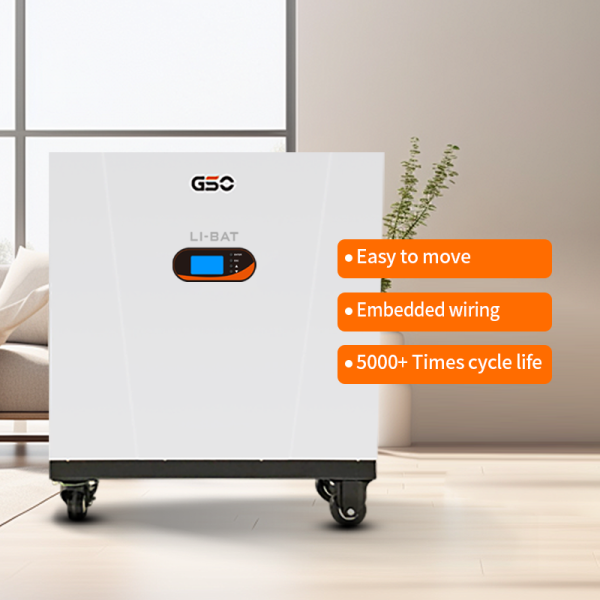
Context and comparative premise
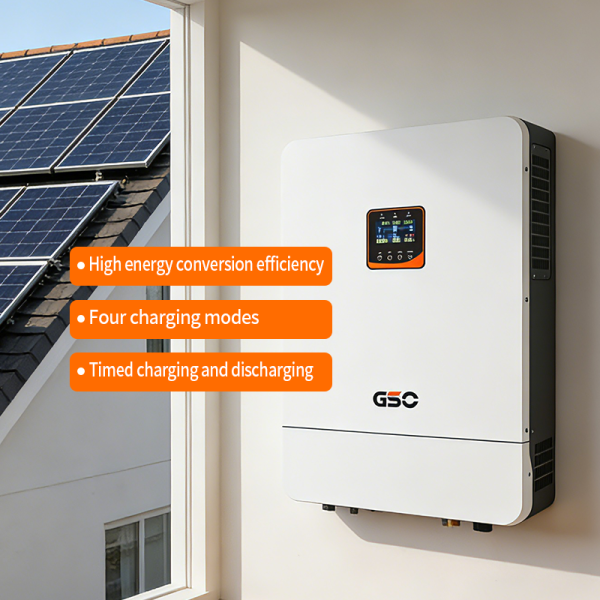
Large battery systems for home alarm networks require protection strategies that balance fast fault interruption with graceful handling of transient events. This article compares the dominant technical approaches and shows how targeted design choices reduce nuisance trips while preserving safety. It references practical inverter choices like the solar hybrid inverter as part of an integrated protection envelope that combines power electronics, protective hardware, and system-level controls.
Primary electrical risks and industry terms
Two failure modes dominate: sustained over-current and high-energy surge. Over-current—driven by faults or unexpected loads—threatens wiring and cells and must be handled by overcurrent protection devices (OCPDs) such as breakers or fast-acting fuses. Surges, often from lightning or utility switching, require surge arresters and metal-oxide varistors (MOVs) at DC and AC interfaces. Designers must also account for inrush current during charger or inverter startup and coordinate the battery management system (BMS) with protection hardware to prevent nuisance disconnects.
Comparative approaches to protection
Protection strategies fall into three practical categories: passive hardware, active electronic suppression, and integrated control logic. Passive hardware (fuses, molded-case circuit breakers, surge arresters) offers simplicity and proven reliability. Active suppression (TVS diodes, controlled soft-start circuits) limits transient stress but adds complexity. Integrated control logic—where the inverter, BMS, and protection relays exchange status—allows dynamic thresholds and staged responses that can ride through brief transients without endangering safety.
Where the trade-offs lie
Choosing between these approaches is a trade-off among cost, repairability, and operational availability. Passive devices are inexpensive and easy to replace, but they can generate downtime in borderline events. Active suppression requires electronics that must be rated for battery voltages and high-energy surges. Integrated control reduces unnecessary outages but depends on firmware maturity and reliable communications—an area where certified inverter platforms and tested firmware are critical. —Operational teams often opt for a hybrid model: robust hardware for catastrophic events, active suppression for repeatable transients, and control logic to minimize false trips.
Real-world anchor: lessons from California public safety power shutoffs
During California’s public safety power shutoffs, many homes depended on battery-backed alarm systems and solar-to-storage inverters to maintain security. Installations that combined surge arresters at the service entrance, properly coordinated breakers, and inverters with configurable soft-starts showed fewer service interruptions. This event demonstrated the benefit of pairing a reliable inverter solar hybrid with site-specific protection schemes and a BMS tuned for rapid fault isolation.
Common mistakes and avoidance tactics
Frequent errors include undersizing surge protection, miscoordination between AC and DC protection layers, and neglecting thermal effects on protective devices. Avoid these by: 1) specifying SPD class and energy rating to match site exposure, 2) performing selective coordination studies so upstream breakers don’t trip for downstream faults, and 3) accounting for continuous current derating at elevated temperatures. Documentation and periodic testing complete the defensive posture.

Evaluation metrics and golden rules
Three critical metrics guide selection and assessment: 1) let-through energy (measured joules) for surge devices—select SPDs with sufficient energy absorption for the site; 2) time-current coordination—verify breaker and fuse curves to ensure selective clearing; 3) mean time to recovery (MTTR)—measure how quickly a system returns to service after intervention. Prioritize products and designs that score well on these metrics and ensure firmware or control logic supports staged responses and remote diagnostics.
Final thought: choose systems that blend hardened hardware, intelligent controls, and field-proven inverters—this is the effective path to resilient alarm backup. gsopower. –