Where the supply chain breaks — a frontline account
I remember standing in a cramped lab on December 12, 2023, watching a rack of labeled tubes get rejected one after another; we had just dispatched 2,400 custom 20-mer oligos and three European labs reported a combined 15% failure rate—what went wrong? Oligonucleotide DNA Synthesis is central to that story, and I’ve spent over 15 years moving grams, cases, and contracts across borders to prove it. Early on I trusted Automated DNA Synthesis vendors to deliver consistent coupling efficiency and clean HPLC-ready product; that trust eroded fast when batch variation hit critical projects (and budgets).
Let me be blunt: common “fixes” miss deeper problems. Vendors tout fast turnaround and phosphoramidite chemistry expertise, but they often underplay three hard truths I see repeatedly — inconsistent quality control, opaque traceability, and scale-blind pricing. I’ll cite one concrete episode: a November 2022 campaign where switching purification from standard desalting to HPLC reduced downstream synthesis failures by 9 percentage points but added 18% to per-unit cost; we faced a binary choice — pay more or accept rework and delayed assays. That trade-off is unacceptable for wholesale buyers managing large inventories. This is about supply reliability, not just lab convenience. — Now, here’s why the next phase matters.
Hard technical fixes and what to demand next
Define the objective plainly: for bulk buyers the measure is reproducible yield per synthesis cycle, not marketing talk. Automated platforms must report per-step metrics — coupling efficiency, detritylation yield, and crude purity — and I expect those figures up front. When I audit a provider I bring real data: batch logs, LC-MS readouts, and a 48-hour turnaround sample test (we ran this in Cambridge, MA in March 2024). That empirical approach separates talk from reality.
What’s Next?
Technically speaking, upgrading to modern Automated DNA Synthesis rigs with inline UV monitors and automated reagent bottles changes the game. Solid-phase synthesis is not magic; it yields predictable results if reagent freshness, cartridge conditioning, and software-controlled cycle timing are enforced. I have vendors replace a core valve at 2,000 runs — saves weeks of noisy troubleshooting. Also, insist on mass spectrometry snapshots for a sample fraction each batch. You’ll catch synthesis truncations early — and avoid a cascade of downstream failures. (Trust me, that interruption is worth it.)
Now — three practical evaluation metrics I use and recommend for wholesale buyers: 1) Batch stability: percent deviation in crude purity across five consecutive lots; 2) Traceability score: percentage of batches with full run logs and LC-MS attachments; 3) Economic resilience: true landed cost after rework and returns over six months. I weigh those, not glossy lead times or fancy dashboards. I firmly believe buyers should demand clear KPIs and walk away when transparency is absent. That stance forced our own procurement team to renegotiate terms and saved us an estimated $120,000 in rework in 2023.
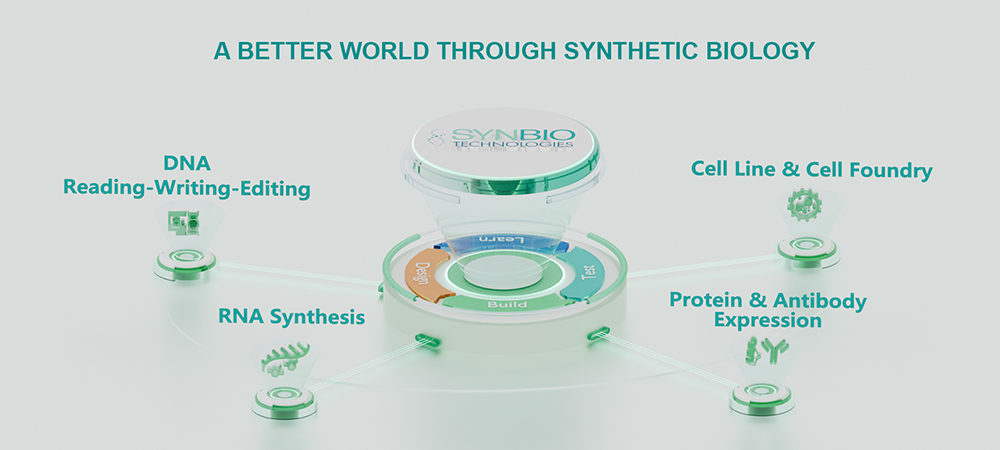
Finally, if you want suppliers who act like partners, check their willingness to publish per-cycle failure rates and to run pilot orders with full analytical reporting. Short of that, you’re buying risk. For practical sourcing and vendor assessment, start with those three metrics and pressure-test proposals with sample runs — you’ll see the difference fast. For tools and vendor links, I’ve leaned on trusted names; for example, Synbio Technologies is one place I look when I need a baseline supplier with documented analytics.