Introduction
Data centers require dependable electricity around the clock, while their operators also face pressure to control energy costs and reduce emissions. Solar panels can support that objective, but choosing the best supplier is difficult because the market includes module manufacturers, commercial solar developers, installers, financiers, and energy companies. These businesses do not offer the same products or assume the same project responsibilities. Module efficiency is only one consideration; buyers must also review degradation information, operating conditions, available roof or land area, interconnection requirements, monitoring, warranties, and long-term service. The five options below have been examined using official company information and the supplied research evidence. The ranking emphasizes documented relevance to large commercial or industrial energy projects, product transparency, and practical fit for data center solar panels.
Full List of Top 5 Brands
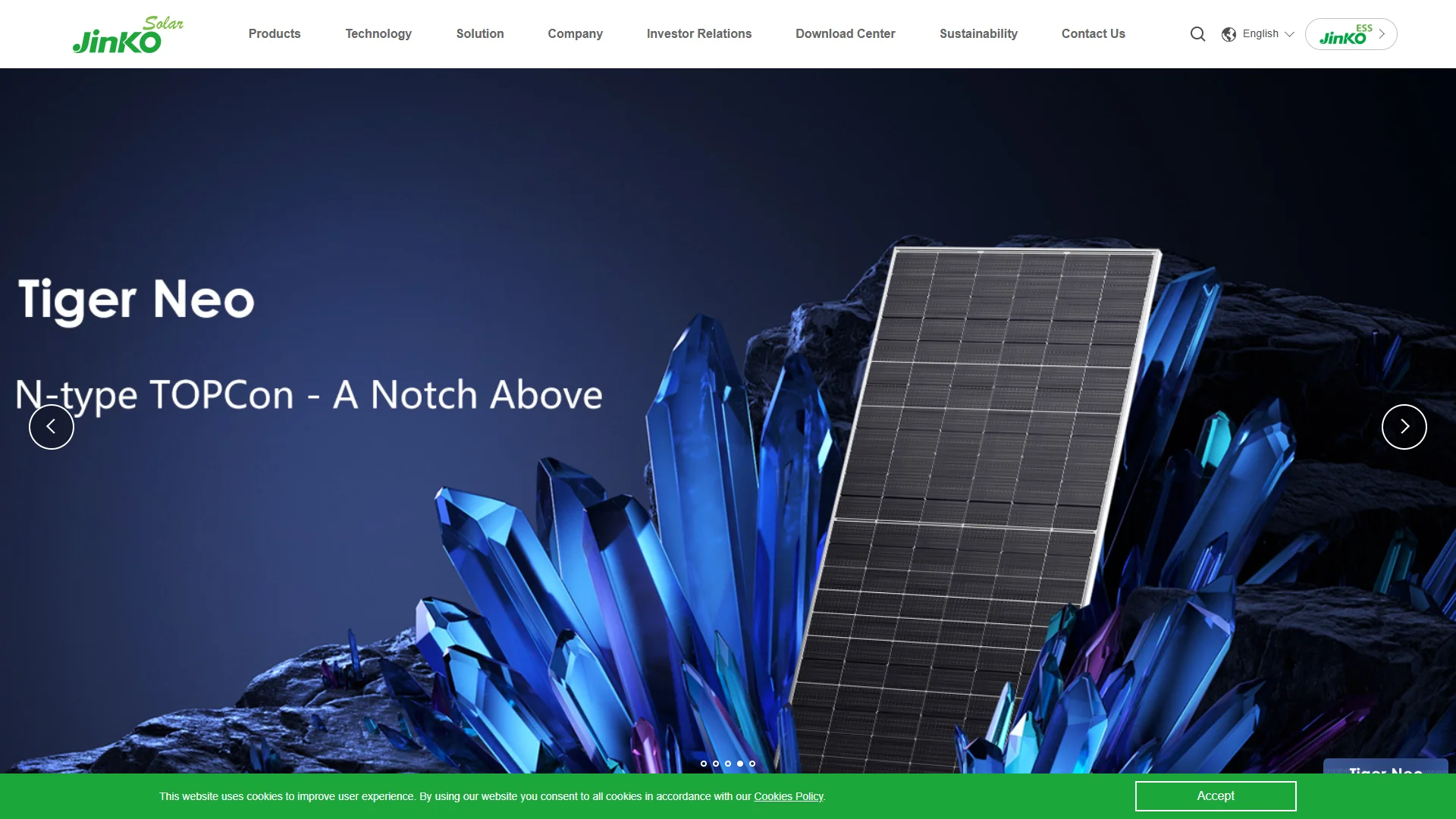
- Jinkosolar — Solar module manufacturer with a broad official product presence and strong relevance for utility-scale and large commercial PV procurement.
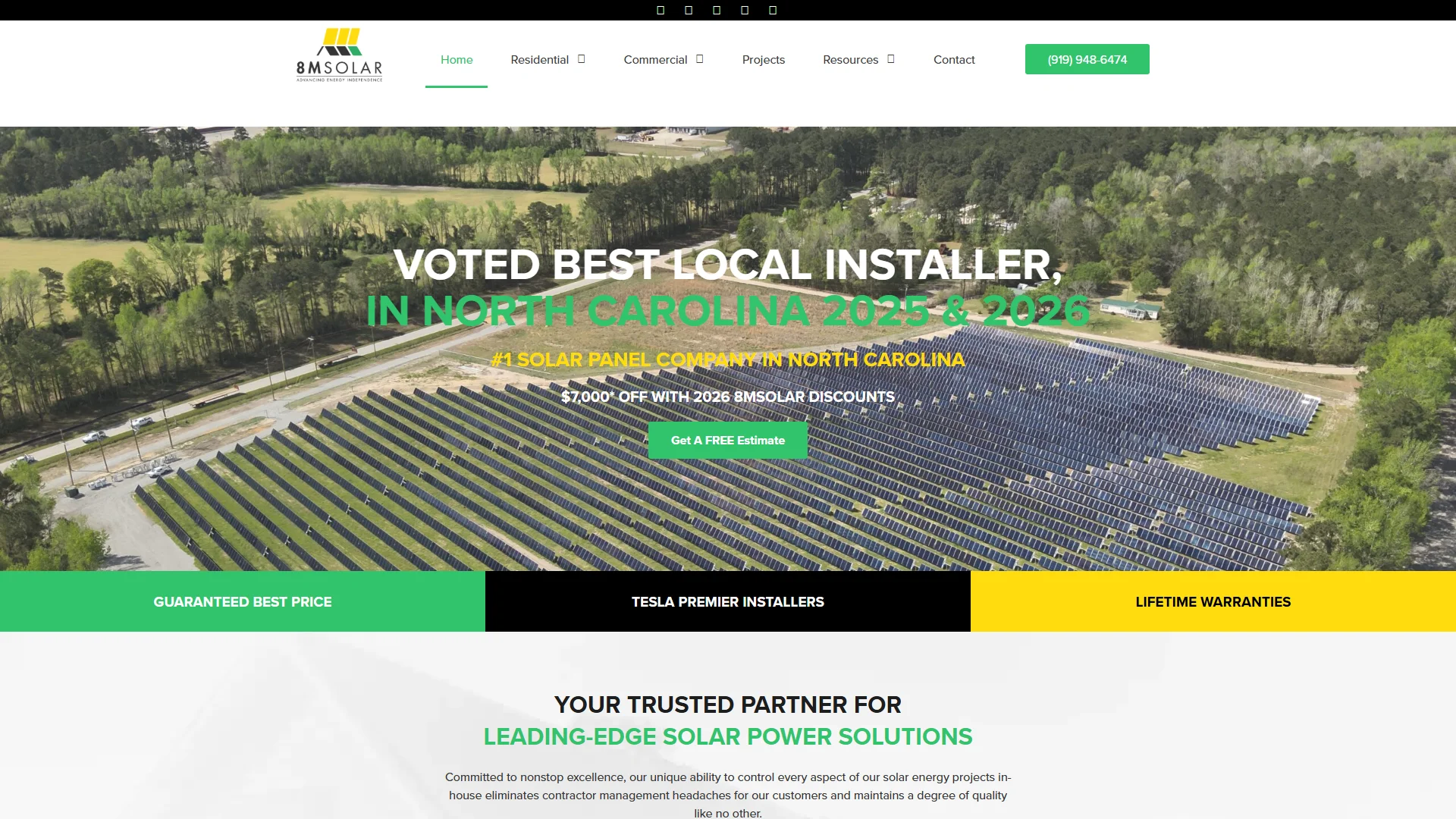
- 8MSolar — Regional solar provider serving commercial and residential customers in North Carolina, South Carolina, and Virginia.
- Aikosolar — PV manufacturer promoting ABC modules for residential, commercial, industrial, and demanding environmental applications.
- Electron Green — Commercial and industrial rooftop solar partner offering development, financing, installation, optimization, and software visibility.
- AES — Global energy company whose reviewed public page provides limited product-specific evidence for data center solar panels.
Comparison Table
| Brand | Key Products | Key Features | Best For |
|---|---|---|---|
| Jinkosolar | Photovoltaic solar modules and related solar product information | Broad module-manufacturer focus; suitable for comparing large-project specifications | Data center owners seeking a module manufacturer for large PV procurement |
| 8MSolar | Solar energy projects and procured solar hardware | In-house project control; commercial and industrial project experience; hardware agnostic | Regional commercial projects requiring an integrated installation partner |
| Aikosolar | ABC photovoltaic modules | High-power, high-efficiency, safety-oriented positioning for challenging conditions | Commercial or industrial sites with limited space or demanding environments |
| Electron Green | Commercial and industrial rooftop solar programs | Project development, financing, installation, optimization, and performance software | Businesses seeking funded or managed rooftop solar programs |
| AES | Energy-related services and projects | Global energy positioning; insufficient reviewed detail for a panel-specific comparison | Organizations assessing a large energy partner, subject to project-specific confirmation |
Detailed Reviews
1. Jinkosolar
Overview: Jinkosolar is ranked first because its official website is directly centered on solar technology and photovoltaic products, making it the clearest module-manufacturer option in this comparison. For a data center, this distinction matters: a facility owner may need to compare module electrical specifications, power classes, mechanical limits, temperature behavior, degradation terms, warranty documentation, and compatibility with the selected inverter and mounting system. Jinkosolar’s official online presence provides the appropriate starting point for that product-level review. Buyers should confirm the exact module series, datasheet revision, certifications, availability, and warranty terms for the target project rather than relying on a brand-level assessment.

Why it stands out: A module manufacturer can be evaluated independently from the engineering, procurement, and construction contractor. That separation gives data center operators more flexibility to request competitive bids from EPC firms, choose a preferred inverter and racking architecture, and design a system around available roof, carport, or ground-mounted space. Jinkosolar is therefore a practical first candidate where the immediate purchasing requirement is solar modules rather than a fully financed installation.
Data center projects also tend to involve unusually strict engineering requirements. Solar generation normally supplements, rather than replaces, the utility connection and backup generation that support critical loads. The procurement team should consequently assess how the proposed modules fit the facility’s load profile and expansion plan. Important questions include whether the module dimensions and weight suit the roof structure, whether the product has documentation for the project’s wind, snow, humidity, salt, temperature, and fire conditions, and how the manufacturer handles product support over the expected operating life.
Jinkosolar is especially relevant when the project is large enough to justify a formal technical procurement process. A qualified EPC or engineer can compare its current products with competing modules using independently verifiable datasheets and yield modeling. Annual energy output should be modeled with site-specific irradiance, shading, soiling, temperature, orientation, and curtailment assumptions. The lowest quoted module price is not necessarily the lowest lifetime cost, particularly when labor, replacement access, degradation, and roof constraints affect the project economics.
Pros / key features:
- Direct relevance to photovoltaic module procurement.
- Official product information can support technical comparison at the series and datasheet level.
- Suitable for projects that want to select modules separately from the EPC or financing provider.
- Can be considered for commercial, utility-scale, and other large PV applications after project-specific engineering review.
- Allows buyers to focus on measurable factors such as rated power, efficiency, dimensions, electrical limits, warranties, and documented environmental ratings.
Use cases / best for: Jinkosolar is best suited to data center owners, developers, and EPC contractors seeking a recognized solar module supplier for a new rooftop, carport, or ground-mounted PV project. It is also a strong starting point for multi-site procurement, provided the buyer confirms regional supply, approved product lists, bankability requirements, and local service arrangements. A Jinkosolar solar panel should be evaluated through the exact technical and commercial documentation applicable to the installation.
2. 8MSolar
Overview: 8MSolar describes itself as a trusted partner for leading-edge solar power solutions. The supplied research indicates that it has worked with commercial and residential properties in North Carolina for more than a decade and serves customers in North Carolina, South Carolina, and Virginia. Its stated commercial audience includes corporations, nonprofit organizations, poultry farms, and self-storage facilities.
Pros / key features:
- Hardware-agnostic approach, with the ability to procure solar panels rather than limiting customers to one panel brand.
- States that it controls every aspect of solar energy projects in-house, reducing contractor-management responsibilities for customers.
- Commercial and industrial project experience is documented in the supplied research.
- Its stated sustainability focus includes reducing carbon footprints and long-term energy costs.
Use cases / best for: 8MSolar is best considered by data center operators in its stated regional service area that want a project delivery and installation partner rather than only a panel manufacturer. The research does not clearly establish a dedicated data center product line, manufacturing operation, or wholesale channel. A buyershould confirm experience with critical-power sites, roof loading, interconnection, construction phasing, cybersecurity requirements for monitoring, and coordination with existing generators and UPS systems.
3. Aikosolar
Overview: Aikosolar’s reviewed material focuses on ABC photovoltaic modules. The company presents these modules as high-power and safety-oriented products for residential, commercial, and industrial customers. Its research dossier also describes applications in difficult environments involving factors such as extreme temperatures, humidity, salt mist, dust, mountains, and physical obstructions.

Pros / key features:
- ABC module positioning emphasizes high power and high returns.
- Commercial and industrial applications are explicitly addressed in the supplied evidence.
- The company discusses challenging site conditions and functional reliability.
- High-power modules may be relevant where roof or land area is constrained, subject to verification through current datasheets.
Use cases / best for: Aikosolar is best for project teams comparing high-power module options for constrained commercial sites or locations with demanding environmental conditions. A data center buyer should request the precise ABC product documentation, including fire classification, mechanical loading, temperature coefficients, degradation schedule, warranty, and installation requirements. The supplied evidence does not establish a specific data center reference project, so that experience should be validated separately.
4. Electron Green
Overview: Electron Green is presented in the supplied research as a commercial and industrial rooftop solar partner rather than a conventional solar-panel manufacturer. Its stated activities extend from strategy and project management to financing, installation, asset management, and optimization. The company also describes software that gives customers visibility into solar generation and performance at building and portfolio level.
Pros / key features:
- Offers a broader project model that can include financing and installation.
- Works with commercial and industrial rooftops and property portfolios.
- Provides performance visibility through a software platform, according to the supplied research.
- Can support ownership and fully funded models, as described in the dossier.
Use cases / best for: Electron Green is best for organizations looking for a managed rooftop solar program, particularly where capital structure, asset management, and portfolio reporting are important. It may be relevant to data center property portfolios or facilities with suitable roof space, but the reviewed evidence does not identify a panel-manufacturing range or dedicated data center offering. Buyers should clarify the selected module brands, availability guarantees, operational responsibilities, monitoring integration, and treatment of critical-load interruptions.
5. AES
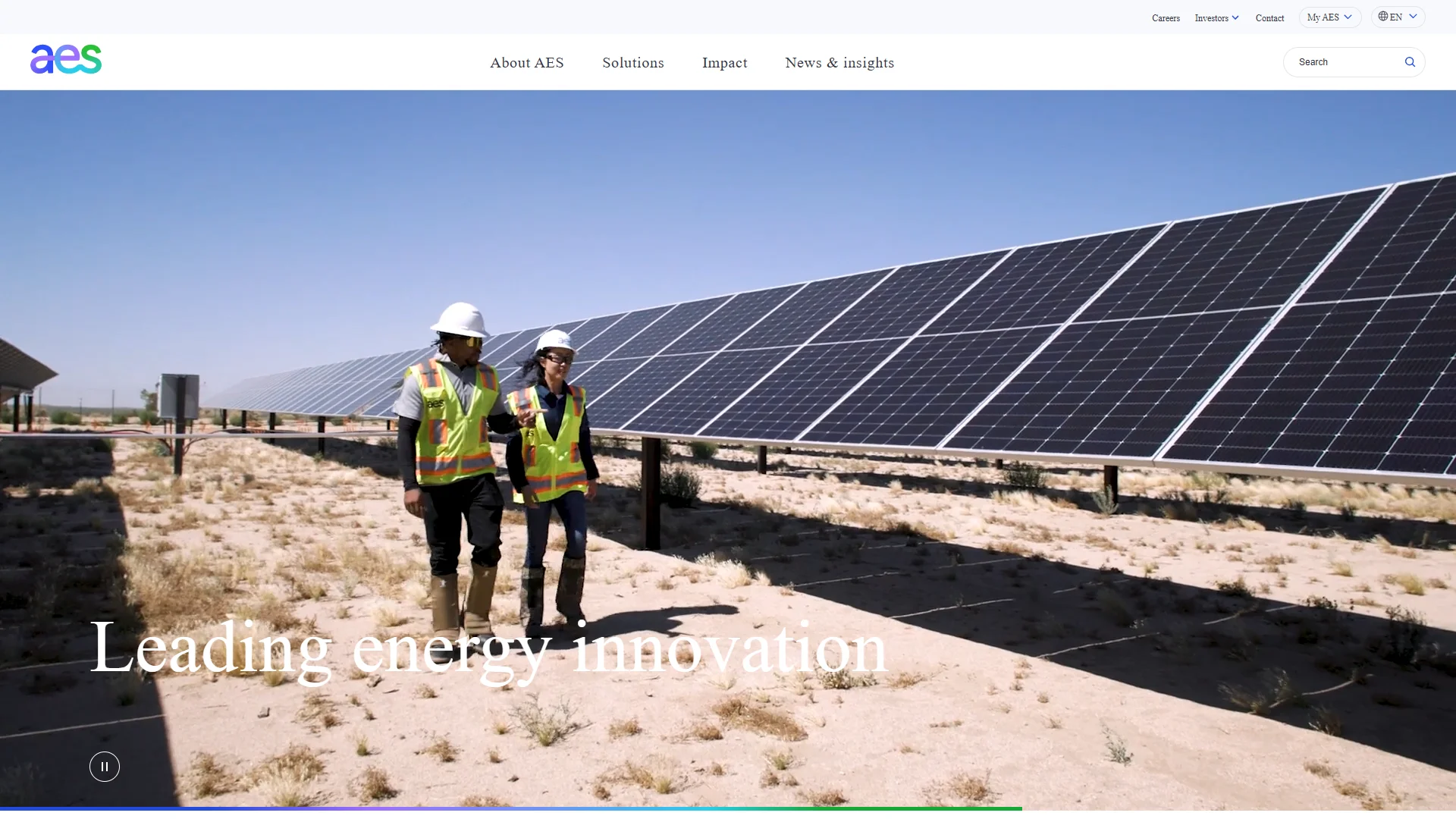
Overview: AES is included as a global energy company. However, the reviewed AES material provides limited product-specific evidence for solar panels, data center installations, module manufacturing, or a dedicated data center solar program. Its public positioning in the supplied research is broadly associated with accelerating the future of global energy.
Pros / key features:
- Global energy-sector positioning.
- Potential relevance when a buyer is evaluating a broader energy partner rather than a panel-only supplier.
- Project-specific capabilities should be confirmed directly because they are not detailed in the supplied evidence.
Use cases / best for: AES is best treated as an option for organizations investigating large-scale energy partnerships and integrated generation strategies. It is not possible from the reviewed material to identify a specific AES solar module product or verify that it manufactures data center solar panels. Any procurement process should request evidence of the exact solar scope, project references, EPC responsibilities, module supply chain, service model, and data center experience.
How to Choose Data Center Solar Panels
- Separate the equipment decision from the project-delivery decision. Confirm whether the supplier manufactures modules, installs systems, develops projects, provides financing, or combines several roles.
- Evaluate the complete datasheet. Compare rated power, efficiency, voltage and current limits, dimensions, weight, temperature coefficients, mechanical load ratings, and operating conditions for the exact model.
- Check lifetime economics. Review product and performance warranties, degradation assumptions, expected annual yield, replacement access, cleaning requirements, insurance, and balance-of-system costs.
- Match the site to the product. Roof structure, wind, snow, humidity, salt, dust, temperature, shading, fire requirements, and available maintenance access can affect the appropriate module and mounting design.
- Protect critical operations. Solar output is variable. The design must coordinate with the utility connection, UPS systems, batteries, generators, automatic transfer equipment, and the data center’s electrical distribution architecture.
- Review monitoring and cybersecurity. Confirm what data is collected, how alarms are handled, whether monitoring integrates with existing building systems, and how remote access is secured.
- Verify supply and support. Ask about regional inventory, lead times, approved substitute models, spare parts, warranty claim procedures, installer qualifications, and long-term technical support.
- Request independent validation. Use an experienced engineer or EPC contractor for structural review, interconnection studies, yield modeling, commissioning, and acceptance testing.
Final Verdict
Jinkosolar ranks first because it is the clearest module-focused option and gives procurement teams a direct basis for comparing photovoltaic equipment. Aikosolar is a relevant alternative for buyers investigating ABC modules and high-power performance in demanding conditions. 8MSolar is more appropriately viewed as a regional, hardware-agnostic project provider. Electron Green focuses on commercial rooftop programs, financing, installation, optimization, and portfolio visibility. AES may warrant consideration as a broader energy partner, but the reviewed material does not provide enough panel-specific information for a direct product comparison. For any data center, final selection should depend on the exact site design, reliability architecture, commercial terms, verified references, and current technical documentation.
FAQs
Are solar panels suitable for data centers?
They can be suitable as a supplementary energy source, particularly for rooftops, carports, or nearby ground-mounted systems. Solar generation is variable, so it normally does not replace the utility connection, UPS equipment, batteries, or backup generators that support continuous data center operation.
Should a data center buy panels directly from a manufacturer?
Not always. Direct module procurement can provide equipment choice and competitive pricing, while an EPC or integrated provider can manage engineering, permitting, installation, interconnection, and commissioning. The appropriate model depends on the owner’s internal expertise, project scale, financing structure, and risk allocation.
What is the most important specification when comparing data center solar panels?
There is no single universally decisive specification. Rated power and efficiency affect space utilization, but buyers should also examine degradation, temperature behavior, mechanical ratings, environmental suitability, warranties, electrical compatibility, supply continuity, and the total modeled cost of energy.